• Bay of Quinte candidates lay out their vision for the upcoming provincial election

    By: Sam Franks

    BELLEVILLE – Candidates for the provincial election in Bay of Quinte riding are talking about their plans to address some of the biggest issues in Ontario; including education, housing, and the stress on the healthcare system.

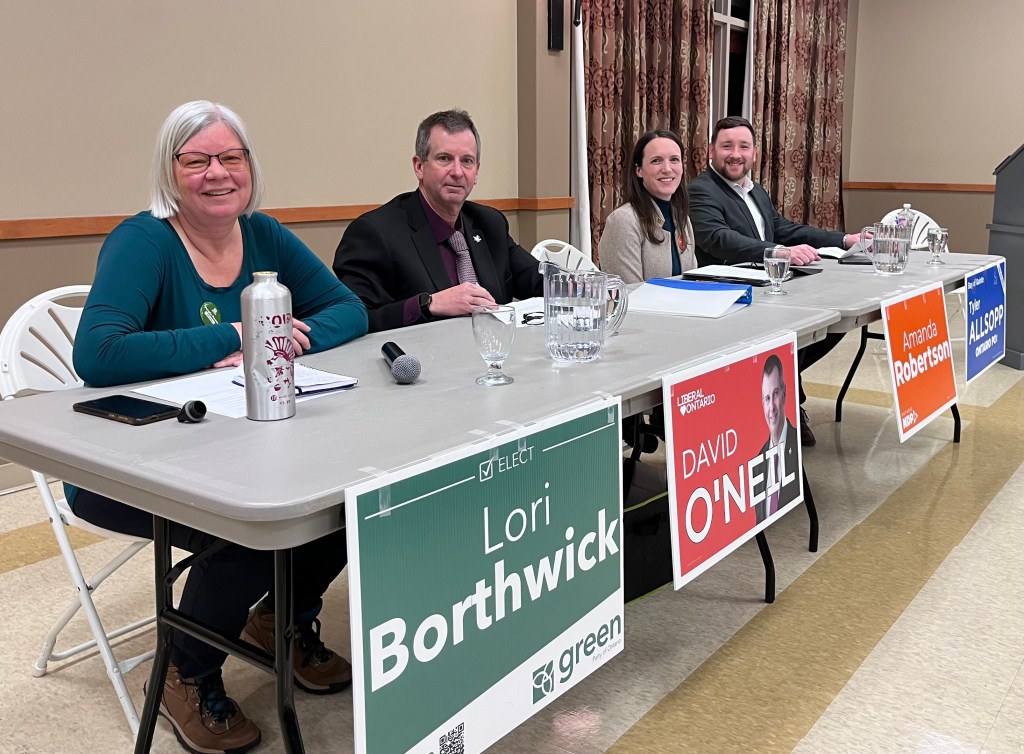
    QNet News was able to speak with NDP  candidate Amanda Roberston and David O’Neil from the Liberal Party.  The Progressive Conservative’s Tyler Allsopp did not respond to calls and QNet News was unable to interview Green Party candidate Lori Borthwick before deadline. 

    Roberston is running for the NDP in Bay of Quinte for the second time. She’s the vice-chair of the Hastings Prince Edward District School board.

    Asked why she’s running again, Robertson said that she has seen many members of her community suffer from a variety of issues and wants changes.

    “Communities all look a little bit different, and I think if we don’t have our voice represented strongly, we’re not going to see our self reflected,” Roberston said.

    Robertson says her campaign will  revolve around health care, community involvement and making municipalities heard at a provincial level.

    “I know we have an opportunity to elect a Premier who cares about all of us and cares about investing in us to make life easier for us to not only be comfortable, but to get ahead,” Roberston said.

    David O’Neil of the Liberal Party says he was only recently approached to be the candidate.

    “It’s my first time running. I never thought I’d have the opportunity. I was quite ecstatic when they asked me to consider. I hope, if I do get elected, I can represent the riding well,” O’Neil said.

    O’Neil is hoping to follow in the footsteps of his father, MPP Hugh O’Neil, who was a Liberal MPP for 20-years.

    Liberal candidate David O'Neil.

    Liberal candidate David O’Neil. Photo from quintewest.ca

    O’Neil says that his experience as a Quinte West councillor brings an extra insight to the communities needs.

    “I understand what municipal governments need from the province and what we require. What would be some of those things that municipalities require,” O’Neil said.

    Bay of Quinte NDP candidate Amanda Robertson poses in front of the orange NDP sign.

    Bay of Quinte NDP candidate Amanda Robertson. Photo by Hailey MacDonald

    Healthcare

    On the health care issue specifically, Robertson said she thinks that the doctor residency program with Quinte Health should be improved to better retain the doctors training within the community.

    “They’re (resident doctors) not opening practices because the overhead costs are too high and from a business perspective, it just doesn’t make any sense, and there’s very little support and acknowledgement for the work they’re doing,” Robertson said.

    Robertson wants to change the nurse-to-patient ratios across the system and says the NDP have a plan to put forward legislation to make sure nurses aren’t overloaded with responsibilities.

    “We have massive draining of our of our nursing staff into these private agencies which will pay them much more because it’s private, but it’s also costing the system, because they can bill OHIP two to three times what it would cost to just pay our nurses more in the hospital,” Robertson said.

    That’s what the Ontario Nurses’ Association has been asking for.

    On Jan. 29 there was a rally in Toronto to shed light on the nursing crisis and stress.

    “Not only will nurse staffing ratios improve the quality of care, but they will also mean fewer emergency department closures, especially in smaller communities,” said ONA president Erin Ariss in a news release.

    According to the release, hundreds of nurses gathered on Richmond St. in Toronto on Thursday to advocate the root problem of the healthcare crisis.  

    O’Neil also wants to see changes in the healthcare in the Quinte region.

    “I would like to see with the doctor shortage, a plan to address the doctor shortage by trying to get more doctors in training, more doctors, a plan to help with the waiting times. Right now, our municipality is trying to find doctors, and it’s competing with a lot of others,” O’Neil said.

    O’Neil is confident in party leader Bonnie Crombie’s plans on healthcare.

    While QNet was unable to speak with either Conservative Tyler Allsopp or the Green’s Lori Borthwick, the party’s respective websites lay out some health care plans.

    The Conservative Party says it will address some of these issues by spending $764 million over two years to provide nurses with retention bonuses up to $5,000

    Green Party candidate Lori Borthwick holds the green party sign and smiles wide.

    Lori Borthwick during the September by-election, holding the sign for the Green Party. Photo by Sam Franks

    The Green Party of Ontario’s website says that they plan on “expanding professional mental health services covered by OHIP, making them accessible, affordable, and comprehensive” if elected.

    Housing

    Finding affordable and liveable housing has also been a problem in Ontario for a number of years.

    Belleville built just over 300 homes in 2023, almost a 50 per cent decrease from the previous year, according to Statistics Canada.

    O’Neil said that since he has been a Quinte West councillor, he understands what municipal governments need from the provincial government.

    “Funding for infrastructure. The costs have skyrocketed to municipalities, and if we’re going to do affordable housing, it’s pretty hard to do it with just what the funds we raise at the municipal level. We need help from both the provincial and the federal levels of government to help with our infrastructure costs,” O’Neil said.

    O’Neil says while the Ford government has done some good, the controversies of the Greenbelt land sales show that the current government is mishandling finances.

    Robertson said that housing is one of the main priorities of the NDP. She believes that Ontario’s issues are tied together and by addressing housing issues will reduce the stress on healthcare workers.

    “We’re looking to double the supply of permanently affordable housing by providing funding and low-cost financing and public land for nonprofit and co-op housing providers,” Roberston said.Audio Player

    00:00

    00:00

    Use Up/Down Arrow keys to increase or decrease volume.

    There is nothing specific about housing  on the Conservative website.

    The Green party wants to build more communities by “adding more affordable housing, electrifying transit, and connecting communities so people can work, live, and play in strong and sustainable neighbourhoods,” according to their website.

    Education

    Since the international student cap, many colleges and universities in Ontario are feeling the affects. There have been strains on all sectors of education.

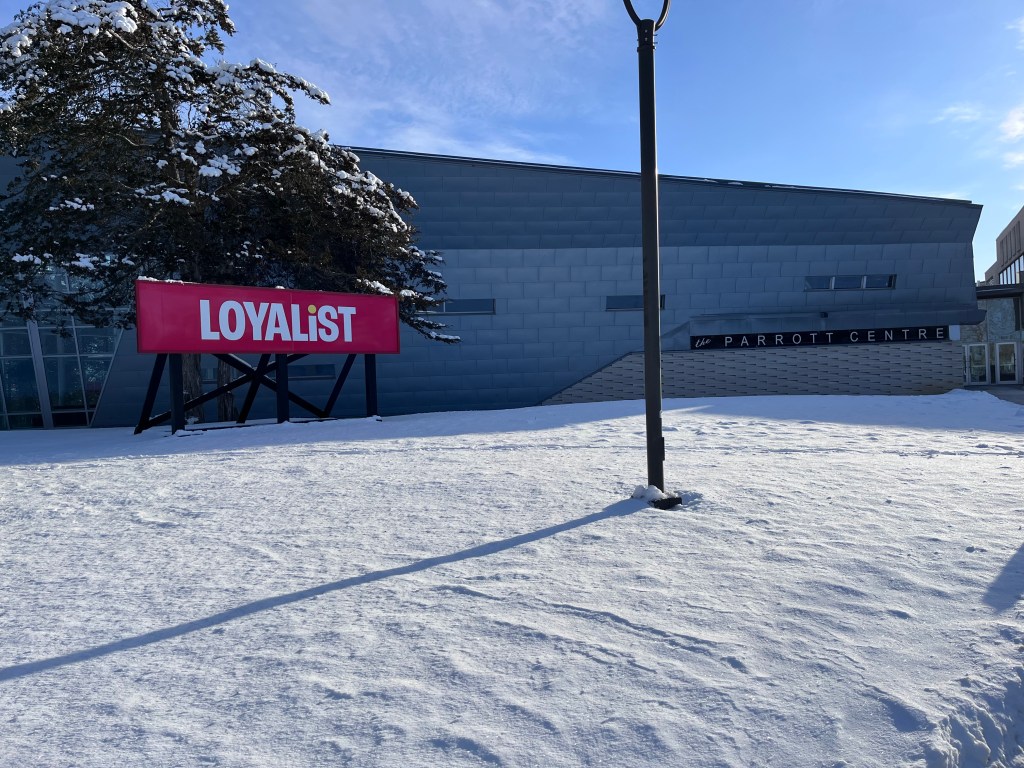
    Roberston was shocked to hear about the suspension of 24 programs at Loyalist College and thinks it could have been prevented.

    “They (Conservative) cut funding in 2018 and then they froze tuition increases for domestic students in 2018. Then refused to come back to the table to look at how that might impact. So, this was a predictable tragedy, and it’s now playing out in real time. It’s completely indefensible by this government,” Robertson said.

    Robertson said that the strains can be felt at the kindergarten to secondary school level.

    “We can build all the nice new buildings we want, but if we’re not supporting the staff within them, we are going to have a big problem within our education sector. And we are seeing that, similarly to healthcare, where we have teachers burning out of all experience levels,” Roberston said.

    O’Neil also said that the education system is underfunded.

    “There’s not enough staffing to look after the people that’s there. Especially with all the mental health problems,” O’Neil said.

    O’Neil said that teachers are having to deal with more behaviours and have to learn skills outside the scope of teaching taking away from their main job.

    Roberston also wants to address the use of artificial intelligence in classrooms and that the government needs to be clear on their direction with the use of A.I. and education.

    The election will take place on Feb. 27. Residents of the Bay of Quinte region who are eligible to vote can do so before Feb. 27 at the election office at 71 Adam Street in Belleville. The election office is open Monday to Saturday from 10a.m. to 8p.m. and Sunday from 12p.m. to 5p.m.

    Advanced voting started Thursday Jan., 30 and continues until Feb. 26.

  • Indigenous Understanding Reflection
    Reflection video on the semester in Indigenous Understanding

    I was having the worst time with Premiere Pro so had to improvise, so sorry!

  • A brief history of over 300-years of Indigenous Peoples displacement in Belleville, Ontario

    By Sam Franks

    BELLEVILLE – Originally the land of the Mississaugas of the Credit, now the home of the Mohawks of the Bay of Quinte (KENHTÈ:KE KANYEN’KEHÁ:KA) misunderstanding and mistrust lead to the displacement of thousands.

    The Mississaugas of the Credit were the original inhabitants of current-day Belleville, Ont.

    The Mississaugas are group of Ojibwe (Anishinaabe) First Nation.

    Just under 1,000 members currently reside in Hagersville, Ont. Adjacent to the Six Nations. There are over 2,700 Mississauga members in total.

    Once stewards of over 4,000,000 acres of land bordering Lake Ontario and the “Golden Horseshoe”, after misleading and shady treaty deals now have only 6,000 acres to call home.

    The Mississaugas are traditionally known for being incredible fishers, and being people of the water. They migrated along Lake Ontario based on migratory and fishing patterns.

    The Royal Proclamation of 1763, made it so that only the Crown could buy land from First Nations’.

    There were eight treaties that the Mississaugas were involved in, whether they knew it or not.

    One of the most appalling treaties is the Toronto Purchase, 1787, where what we know as Toronto was bought for under $10,000 and with the understanding it was shared land.

    The Treaty of Paris, 1763, affected all Indigenous communities who believed the word of the British when helping fight The Seven Years’ War. France surrendered its land to the British, who then gave the land to the American rebels they were fighting years later in the American Revolution.

    This displaced thousands of Indigenous peoples.

    Mohawks were displaced to Quebec area and current day Belleville. The Mississaugas welcomed the Mohawks upon arrival.

    A plaque that is located at the landing site.

    The Mohawks arrived on canoe on what is now called Airport Rd. There is a yearly celebration.

    The Mississaugas surrendered this portion of the land in the Gunshot Treaty, 1788.

    A monument of the treaty can be seen in Carrying Place.

    Not all of the chiefs were present for the treaty.

    The boundaries of land were established by how far the shot of a gun could be heard from the shore of Lake Ontario.

    In 2015, the Rouge Tract land claim was submitted but hasn’t received answers.  

    The Mississaugas were not included in the Williams Treaty, 1923, which was the last treaty of significant land surrender. The Mississaugas never intended to surrender their land on the Red River Valley, which spans through Manitoba and parts of the United States of America.

    Colonization caused over half of the Mississaugas population to decrease, from over 500 people to 200.

    Maanjidowin: The Gathering is a statue that recognizes the Mississaugas of the Credit First Nation, located at the Billy Bishop Toronto City Airport.

    The sculpture was created by Ohsweken born, Indigenous artist, David M. General and symbolizes the relationship between the Mississauga’s and the natural elements.

    Present day, the Mohawks of the Bay of Quinte still reside in the area which they were greeted by the Mississaugas approximately on May 22, 1784.

    The Mohawks were displaced from current day New York State, around Albany after the American Revolution.

    The Simcoe Deed, or Treaty 3 and a half, was signed in 1793 after nine years of negotiations.

    Land boundaries were unclear, however Mohawk people got way less than what was promised. Fishing and hunting were never included in the treaty as this was done orally.

    Today, the Bay of Quinte Mohawks have stewardship of approximately 18,000 acres, and there are over 8,000 members.

    After 14 years of being under a boil water advisory, over three quarters of the homes in Tyendinaga had access to safe drinking water. This was announced in 2022.

    Which was always shocking considering less than 20-kilometres away the City of Belleville had clean water.

    Homage of the three Mohawk clans: Bear, Wolf and Turtle at Belleville’s Festival of Lights Event

    The Mohawks are apart of the Iroquois Confederacy.

    The Iroquois Confederacy includes the Mohawks, the Oneida, the Cayuga, the Seneca and the Onondaga. Adding the Tuscarora in 1722.

    The Iroquois Confederacy was established after the Great Peacemaker and Hiawatha travelled long and far across the lands spreading the message of peace and love.

    The Nations within the Iroquois Confederacy are also referred to as Haudenosaunee meaning “people of the longhouse”.

    Hiawatha and Peacemaker built the longhouse for all the Nations to sit and meet together.

    The people did not believe The Great Peacemaker at first. He was tested to climb a tree and if he survives the fall, he must be who he says he is. The tree was cut down and the next day Peacemaker appeared.

    The Nations joined together to set out for Hiawatha’s chief – who had snakes for hair. Hiawatha forgave the chief and combed the snakes out of his hair.

    The White Tree of Peace was planted to remind everyone of the message The Peacemaker and Hiawatha spread.

    The Mohawk flag colours are derived from the Two Row Wampum Belt which was given to British settlers to show harmony in different lifestyles. But it wasn’t a tangible thing, but an ethical concept which is foreign to the Eurocentric mind.  

    The white to symbolize peace and something good, the purple to represent civic affairs and mutual respect.

    The Eagle is symbolic of the Peacemaker and will warn the Haudenosaunee Peoples if there is something bad or danger coming.

    The Chain represents the ongoing need for communication between Haudenosaunee Peoples and the Europeans and the now established government system to address the systemic issues.

    The Circle is for unity and to always have the back of another Nation.

    A building of great historic significance is Her Majesty’s Royal Chapel of the Mohawks on Old Hwy. 2, it was built in 1843.

    One of the most important stories is the creation story when a mystical Skywoman came down from another world and landed on a turtles back.

    An interpretation of Skywoman at Quinte Mohawk School by M. Walton.

    She had a pouch with a seed in it.

    Many animals tried to swim to the bottom of the sea to get soil for Skywoman.

    A muskrat was successful.

    She walked counter-clockwise around the turtles back creating Turtle Island.

    This is why Haudenosaunee peoples dance counter-clockwise, in respect to life and the Skywoman.

    Women are traditionally held in high respects in Indigenous culture.

    There has been a long history of displacement within all Indigenous communities.

  • Fourth generation Indigenous leatherworker gives lesson in culture and craftsmanship to college students

    By: Sam Franks

    TYENDINAGA – On Thursday, Nov. 14, Mohawk (Kanyen’kehá:ka) leatherworker, Cheryle Maracle, informed nine students about the tradition and importance of her work and culture.

    Maracle said she remembered visiting the farm when she was a child and the significance of her cultural traditions.

    “It really is a gratifying job. We are taught to utilize every piece of the animal that we can,” Maracle said.

    Cheryle Maracle stands at her outside work space. She’ll be busy from now until the end of the year.

    She said that in a year they can process over 1000 deer hides.

    They also receive moose, elk, and bears.

    Maracle won’t work with bears in respect to her clan. Her deposit still accepts bears as she is not the only worker.

    “What we do with that is we render down the fat and we make medicines with that. We also use the hide and stuff to make different crafts,” she said.

    Creams and different oils for ointment are the medicines made from the animals.

    Maracle is a member of the Hats for Hides program.

    “The program involves distributing patches signifying a successful hunt for animals,” Maracle said.

    The initiative to reduce animal hide waste and get more hides in the hands of Indigenous crafts makers was established over 60 years ago by the Ministry of Natural Resources.

    “These patches were originally accompanied by orange hunting hats,” she explained.

    The number of drop-off depots that accept hides like Maracle’s is significantly dropping.

    In 2019, there was 35 deposits accepting hides, in 2023 there was 11 deposits and this year there’s only five.

    “We were just over 30 collectors in southern Ontario before COVID. The industry asked us not to do this because they were claiming that this was COVID at one point,” Maracle said.

    Outside of Maracle’s barn on Old Hwy. 2.

    Maracle said that she took that first pandemic year off and many of her fellow collectors did as well.

    When others left the industry, Maracle returned.

    “In the grand scheme of hunting there’s thousands of deer that are shot in our area a year, and somebody needs to be doing this. What we do with this is turn it into leather. It is our livelihood,” she said.

    A report by the Canadian Council for Indigenous Business states that nearly three quarters of women owned Indigenous businesses were negatively impacted by the pandemic.

    “We sell to First Nations people all over North America. We also travel powwows in the summer time. And that’s our means of commerce,” Maracle explained.

    According to a report from Statistics Canada, one of the constraints of Indigenous owned businesses is due to location.

    The isolate geographical locations can make it hard to sell or cease business, like Maracle had to during COVID.

    Another challenge is rising costs of goods.

    “When I started six years ago, the salt was $4 a bag. Now it’s almost $9 a bag,” Maracle said.

    A recent report from Statistics Canada, says the costs of manufacturing goods have increased by 80 per cent.

    Despite all of the stresses when owning her small manufacturing business, she gladly showed students of Loyalist college how to clean a hide, and even let some students try.

    One student, Storm Liscio, was one of those students.

    “It was so cool. I’ve never experienced anything like that,” Liscio said.

    Cheryle Maracle teaches Storm Liscio the proper way to use an ulu before Liscio made her attempt.

    Maracle uses an ulu to clean the animal hides.

    “The key is to find the best knife or the best tool that you can find to do more work than your arm has to,” Maracle said.

    The ulu is a traditional Inuit knife that typically only women use.

    Maracle explained that the way the ulu is designed eases the stress on her wrists compared to other knifes.

    “I’ve gone through so many knives in six years, and this one, this is the answer,” she said.

    Students were left with a deeper understanding and knowledge of traditional Indigenous practices.

    “I’ve never seen anything like what I did today. It was really eye-opening and interesting,” Liscio said.

  • Video – Portfolio
    Group project: I was responsible for conducting the interviews, finding unhoused people willing to talk, building trust and respect. Some editing but that was mostly done by our film students in the group.

  • The poem I have selected is one of my own and about my parents. They recently separated after almost 32 years together. I wrote this around 2 years ago when things were rocky and I had my suspicions but nothing was set in stone. The poem is basically an homage to how I watched my parents fall out of love through my development, but never thought it would turn out the way that it did.

    I am an astrologer so took inspiration from origin stories of the planets to symbolize my parents. The Sun and Sky are representative of their egos. The message is about emotional awareness. My father is an interesting man to describe. I found after his mother died in 2006 he changed. It only got worse when my brother, his first born child, passed away in 2017. He represses his emotions and fails to see how it effects his own goals in life.

    The Sun met the Sky,

    Curated by divine intervention together they created the Earth.

    The Sun shined bright and brought warmth wherever she went.

    The Sky moved swiftly, in unrecognized silence.

    Growing jealous of how the Sun illuminated and retreated when necessary.

    The Sun gave life and joy, while the Sky flourished in chaos and inconsistency – never flowing one way.

    The Sky became dark and fully unleashed his tragedy – forgetting he gave everyone the air they breathe.

    The Sky repressed his emotions and created hurricanes.

    Violently moving his feelings in destructiveness.

    Ignorant to whom was harmed in his storms.

    The Sky’s weather refused to let the Sun shine – views her assistance as weakness.

    Everyone needs someone, even the Gods and Planets.

    All images from pexels.com curtesy of Gleive Marcio Rodrigues de Souza (first image), Josh Sorenson (second image), Johannes Plenio (third image).

  • Looking for work in Quinte generates emotions for job seekers at annual career fair
  • Observation Story for School

    As soon as you turn around the bumpy, gravel country road, you see the beauty of the Massassauga Point conservation area. The water crashing on the rocks, the array of trees, the wind whispering into the unknown. This peaceful sense of tranquility and comfort takes over. Reconnecting to nature in the best way – being submersed in it. There are many conservation areas in the region of Belleville, but the Massassauga Point conservation area has something special about it. Maybe it’s the smell of the air – crisp and clean, it almost teleports you to another province. The friendly people passed on every hike of the 4km trails encompassing the area.

                There are three main trails to travel – blue, green, and red, all branching off into different coloured trails with highlights of this conservation area. The red trail encompasses the entire area – so the full experience can be achieved. The red trail branches off into the pink trail which leads to a gigantic circle of limestone rocks standing 20ft tall. Standing below the rock cliff, looking high above, puts into perspective how small we are, and how ancient these rocks can be. The smaller fragments are fragile like glass while the larger rocks are strong but rough.

                One of the best highlights can be found on the blue trail. Hiding behind the old luscious oak, pine and elm trees is a rustic vehicle. The vehicle appears to be a Ford model, I’m no expert but I would guess from the 1950’s. Only the front of the vehicle is there, what once was a sedan became a coupe. The seats are torn apart with foliage from the forest replacing where the fabric used to lay. The frame is deteriorating, however remains in tact enough to get inside for a closer look. The steering wheel of the car is still attached. What used to be a creamy white, has now faded to a dirty brown. The glove box opens, there is nothing inside but bugs and leaves. It transports you to a different timeline and makes you question how the car got abandoned in such a remote location.

                There is a bench on the far North side of the area, facing the Bay of Quinte. During the daytime it is a place to relax and sit. This spot is optimal for listening to the footsteps of people walking, and the occasional dog that comes to say hello. At nighttime area transforms. You get a full glimpse of the city of Belleville at night. The lights illuminating the sky. They look like stars. The sunrises and sunsets paint the sky and touch the water.

                It truly is a magical area to wander.

    Watching the sunrise from my favourite point.
  • Another poem

    I am an astrologer and a lot of the work that I write in my free time is deeply inspired by the lore behind astrology and Greek mythology. The two go hand-in-hand. This poem is inspired by the story of Gaia and Uranus.

    The Sun met the Sky,

    Curated by divine intervention together they created the Earth.

    The Sun shined bright and brought warmth wherever she went.

    The Sky moved swiftly, in unrecognized silence.

    Growing jealous of how the Sun illuminated and retreated when necessary.

    The Sun gave life and joy, while the Sky flourished in chaos and inconsistency – never flowing one way.

    The Sky became dark and fully unleashed his tragedy – forgetting he gave everyone the air they breathe.

    The Sky repressed his emotions and created hurricanes.

    Violently moving his feelings in destructiveness.

    Ignorant to whom was harmed in his storms.

    The Sky’s weather refused to let the Sun shine – views her assistance as weakness.

    Everyone needs someone, even the Gods and Planets.

    One of my favourite books that constantly inspires me.
  • Ed Sheeran!

    My sister took me to go see Ed Sheeran in the summer. He isn’t really my style of music, however I had a fantastic time and we made a lot of good memories.

    We got sushi before the concert and wandered around Toronto. It was a good day.

    In the end I did end up having a blast at the concert. The way he uses different pedals to create loops, and perform all of his music solo was incredible to watch. I am not a guitar player but I was in awe of how easy he made it seem.